


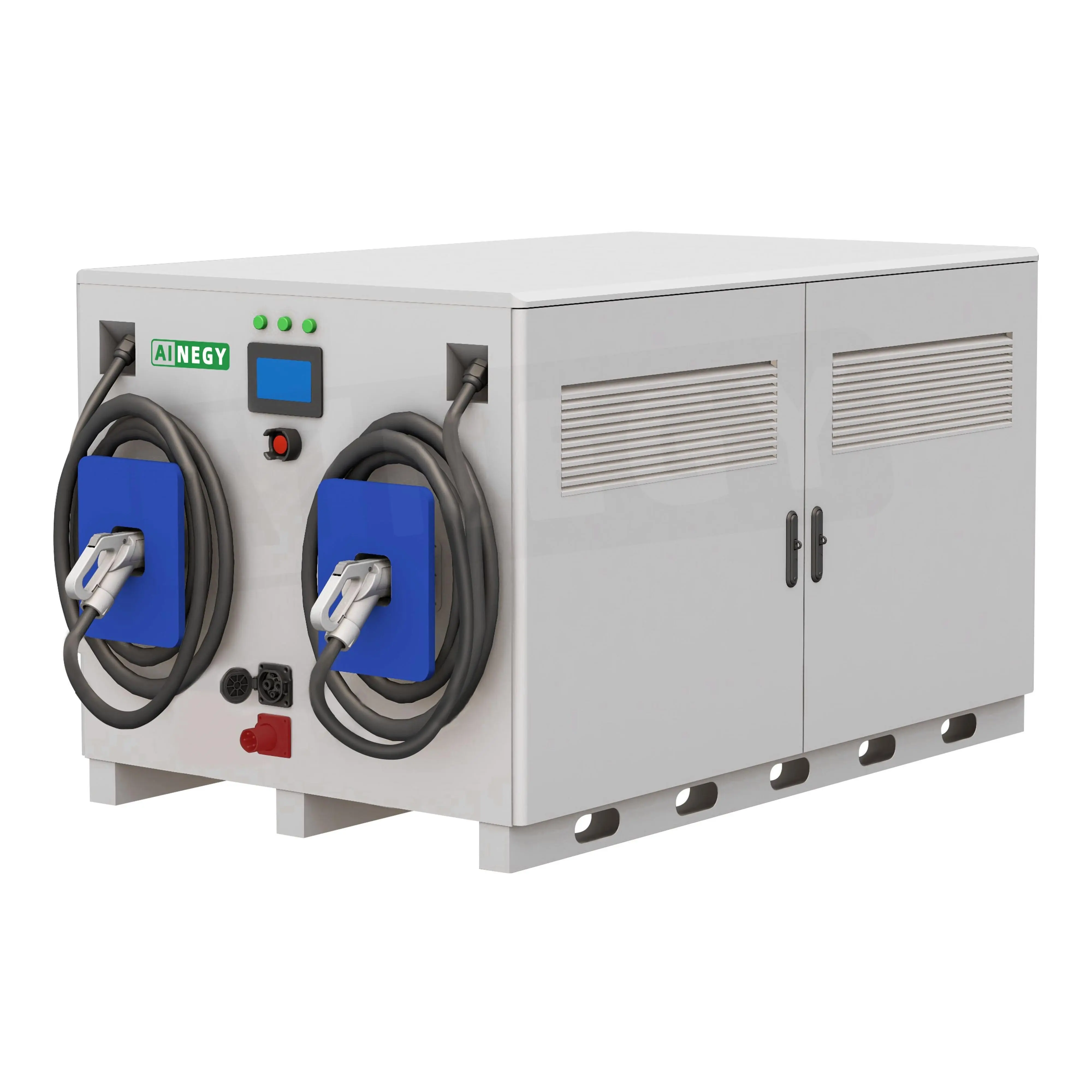
Solar Power Station for EV Charging With 172KWh Battery Energy Storage System High Efficiency DC/DC Charger 120KW
The integrated photovoltaic storage and charging cabinet is a car charging product with high integration, integrated photovoltaic storage and charging, intelligent power distribution, reduced charging pile operation loss, easy to use, modular design, convenient installation, commissioning and after-sales, supports free switching of multiple operating modes, and is suitable for charging stations, charging operations, etc.
● Integrated LiFePO4 Battery/ PV/Charger Module
● Solar/ Storage/ Charger with DC Coupling
● High integration and Easy installation
● Fast charge power: 172KWh
● Battery energy: 120KW
Prduct Advantage
● GBT or CCS1/CCS2/CHAdeMO
● Integrated LiFePO4 Battery/ PV/Charger Module
● Battery, PV and Charger by DC Coupling
● Long cycle life
● Support IP54
● Solar/ Storage/ Charger with DC Coupling
Product Parameters
| Model Name | AIN-172KWH-120KWM-CD2-HA1 |
| Battery | Battery Type | LiFePO4 |
| Rated energy | 172KWh | |
| Cooling method | Air-Conditioner | |
| Fast Charger | Gun type | GBT/CCS1/CCS2/CHAdeMO |
| Max. charger power | 120KW | |
| Charger voltage range | 200~1000Vdc | |
| Charger current | 0~250A | |
| Operation mode | Single-Alone/OCPP1.6J | |
| Quantity of Gun | 2 | |
| Gun wire length | 8m | |
| DC Recharger | Max. recharge power | 60KW |
| Socket type | GBT/CCS1/CCS2/CHAdeMO | |
| AC Recharger | AC type | 3-phase(L1/L2/L3/N/PE) |
| Max. recharge power | 30KW | |
| PV Recharger | Max. power | 60KW |
| Max. PV voltage | 850Vdc | |
| MPPT voltage range | 200~820Vdc | |
| Quantity of MPPT Channel | 4 | |
| AC OUT (Off-grid) | Rated power | 60KW |
| AC voltage | 400Vac/230Vac (3-phase) | |
| Rated frequency | 50Hz/60Hz | |
| Max. AC current | 80A | |
| General parameter | Communication type | RS485/WiFi |
| Protection grade | IP54 | |
| Fire protection system | Aerosol | |
| Operating temperature | -15~50℃ | |
| Humidity range | 5%~95% | |
| Altitude | < 3000m | |
| PCS cooling method | Intelligent air cooling | |
| Dimensions(W*D*H) | 1800*1650*1050mm | |
| Weight | 1550kg(about) |
product details
System working principle diagram
Q&A